A good LiFePO4 e-rickshaw battery lasts several years. Quality LiFePO4 cells are commonly rated for 2,000 to 6,000 full cycles before they drop to 80% of their original capacity. An e-rickshaw that charges once a day uses about 300 cycles a year. Heat, very deep discharges and poor charging shorten that life, which is why the warranty matters. Ours is 3 years.
Cycles, not months
Lithium battery life is counted in charge cycles. One cycle is roughly one full discharge and recharge. Cell makers rate LiFePO4 cells for a number of cycles before capacity falls to 80% of new. For quality cells that is typically 2,000 to 6,000 cycles at 80% depth of discharge, depending on the cell grade.
An e-rickshaw charged once a day, 300 days a year, uses about 300 cycles a year. A driver who tops up twice a day uses more. Either way, a LiFePO4 pack is built to outlast several lead-acid sets.
What "end of life" really means
A lithium battery does not stop working at its rated cycle count. It slowly loses capacity. A pack at 80% of its original capacity still runs, with less range than when it was new. Many owners keep using a pack well past that point.
What shortens battery life in India
- Heat. Charging a hot pack straight after a shift in May is harder on cells than charging a cool one. Let it rest in the shade first when you can.
- Running it to empty every day. Deep discharges wear cells faster than partial ones. Charging before the pack is flat helps.
- The wrong charger. Use the charger that came with the pack. A lead-acid charger is not made for a lithium pack.
- Overloading. Pulling more current than the pack and its BMS are rated for, for example with heavy loads up steep slopes all day, adds heat and wear.
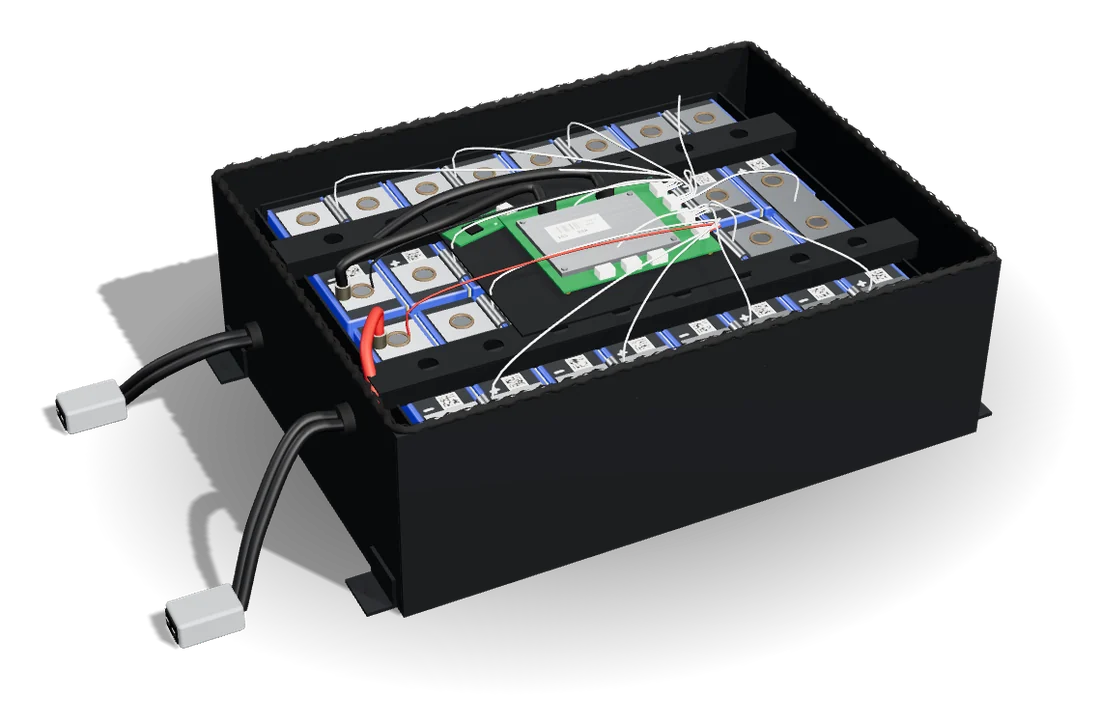
- Cell imbalance. If one cell drifts away from the others, the whole pack is limited by it. A smart BMS keeps the cells balanced.
Why LiFePO4 for e-rickshaws
LiFePO4 (lithium iron phosphate) trades some energy density for long cycle life and thermal stability. In lab abuse tests, LFP cells react more slowly and at higher temperatures than nickel-based lithium cells. For a vehicle that works all day in Indian summers, that trade is worth it.
What to look for in the warranty
- The length in years, and whether it is limited by kilometres or cycles.
- Whether the pack can be traced by serial number. Every Vollterra pack is serial-numbered and every cell carries a QR code.
- Who does the service. Ours is repaired at the plant that built it.
Not sure which pack fits?
Send us your vehicle model or what you need to power. We reply with a fit check and today's price.
Questions people also ask
How many years does a LiFePO4 e-rickshaw battery last?
Several years in normal daily use. Quality LiFePO4 cells are rated for 2,000 to 6,000 cycles, and an e-rickshaw charged once a day uses about 300 cycles a year. Heat and charging habits make a big difference.
What is the warranty on a Vollterra e-rickshaw battery?
3 years on the 51.2 V 105 Ah pack. You can check any pack by serial number on our warranty page.
Can a lithium e-rickshaw battery be repaired?
Often, yes. Faults are usually in a cell or the BMS, both of which can be replaced. We repair packs at our plant.